
Are you in control?
Every business relies on data, but are you managing it effectively and efficiently?
Strong data governance helps protect important information and support compliance,and if done well, can improve decision making and reduce risk.
Ensuring the framework of policies, processes, and controls is in place and being adhered to can be a daunting task, however an organisation has the responsibility to make sure their data is accurate, secure, and used appropriately, defining who owns the data and how it should be managed.
Without a clear approach, and appropriate systems in place, data can become inconsistent and unreliable and this can result in inefficient working practices and increased risk.
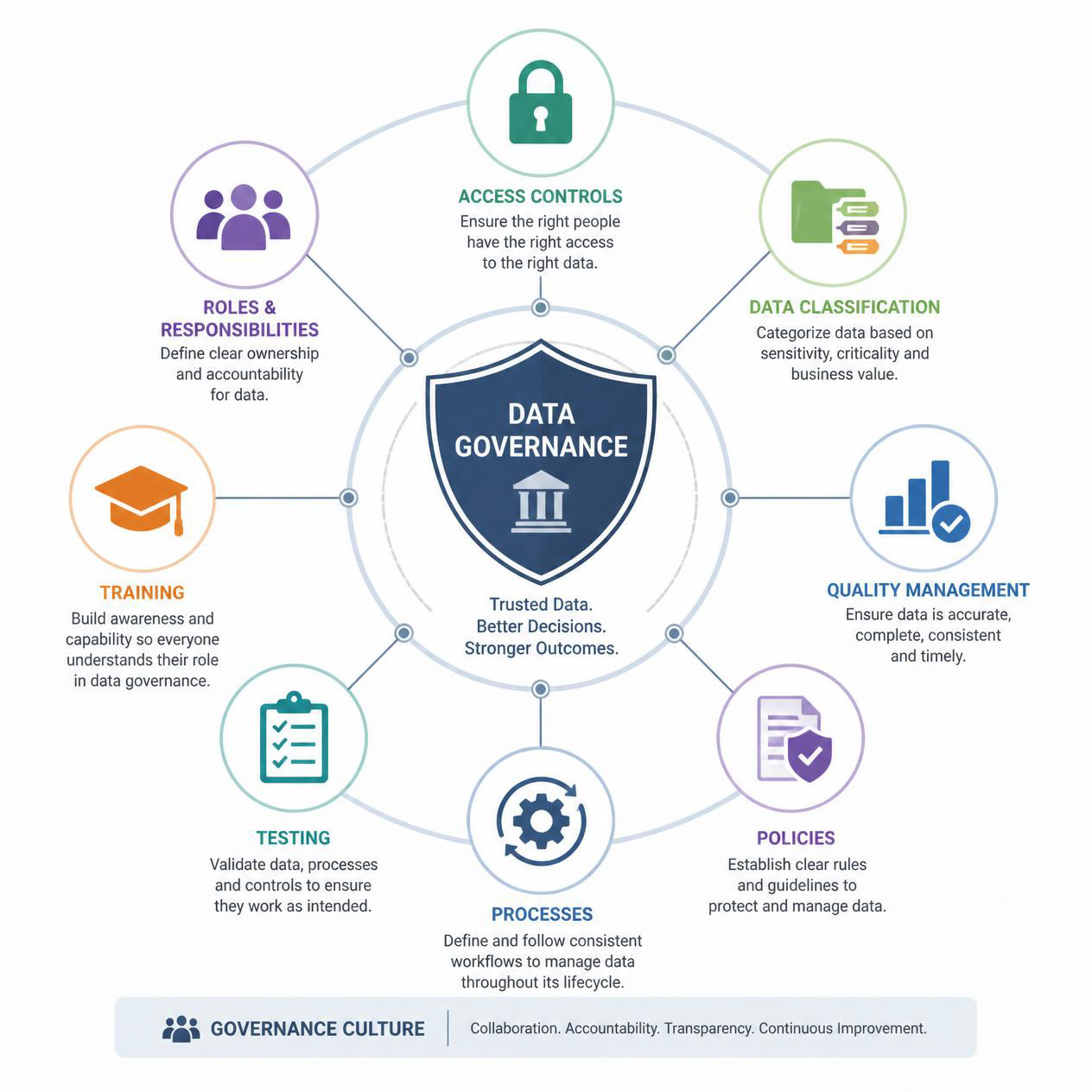
Set the rules: Policies
Policies define how information should be handled and they outline expectations in areas such as:
- Data retention
- Acceptable use
- Information classification
- Access permissions
- Regulatory Complliance
Clear policies provide employees with guidance and allow for consistent processing and handling of information across the organisation.
Processes
Processes are the day to day activities that put policies into action. They might include:
- onboarding and offboarding staff
- how to manage document workflows
- performing backups and data validation
- approval checks for accessing sensitive information
When employees understand and follow a process, they can complete tasks correctly and meet policy requirements, and processes can provide practical examples and direct employees to senior staff members who can answer questions. Organisations should write processes in a clear and accessible way so that all staff can carry out tasks consistently and effectively, therefore allowing employees at different levels of understanding to easily follow procedures.
“Good process management should be about creating behaviours rather than documents”
Controls: monitoring and protecting data
Controls are the safeguards that enforce the policies, and support the processes. Examples include:
- access permissions
- multi-factor authentication
- encryption
- audit logging
- backup solutions
- monitoring systems
Effective controls help organisations identify the risks and prevent unauthorised access, and can therefore be used to prove compliance and good governance to industry regulators and potential investors.
The cost of poor governance
Without effective data governance, organisations put themselves at risk. Poor-quality or duplicated data leads to poor decisions. Weak access controls expose sensitive information to the wrong people. Employees waste valuable time searching for data or recreating information that already exists. The consequences can include data breaches, financial penalties and reputational damage, giving competitors an advantage.
Highstream can help
For many businesses, the challenge isn’t understanding the problem, it’s knowing where to start. Highstream have worked closely with organisations to ensure the technology and systems are in place that align with good practice and strong data governance.
We draw on our experience of cloud based storage, Microsoft 365 account management, online and offline backups solutions, IT security, and disaster management. We help business leaders establish practical controls to meet both compliance and operational efficiency. The positive results we’ve seen often stretch beyond data governance and into wider business frameworks. Businesses are more resilient and flexible when they understand their data better, and it can help grow confidence in the decisions made from the workshop to the boardroom.
For more information about data governance and how we can help prepare you, contact us.